

Mississippi
FY 2024
On May 20, 1785, the Continental Congress provided land to support schools as each new state joined the union. “There shall be reserved the lot No.16, of every township, for the maintenance of public schools within the said township.” Over 134 million acres were subsequently granted in trust as a condition of statehood. Today over 45 million acres continue to be held in trust by 20 states for the support of public schools. Revenue is placed in permanent school funds, now over $115 billion, and over $5 billion was distributed to western schools in FY 2024. However, few educators or members of the public know about school trust lands. Advocates for School Trust Lands is sharing this grand history of America’s founding vision for schools, hoping that over time Americans will know of school trust lands and their support for public schools.
Every state once had school trust lands or a permanent school fund. The original 13 colonies granted themselves lands or funds for schools since they had no federal lands to be granted. As each new state joined the union, they were granted lands to support schools. Of the 20 states still holding lands in trust for schools, Mississippi, who joined the union in 1817, is still honoring their trust for education. In every township which is 6 miles on a side, there are 36 one-mile square sections. Mississippi was granted Section 16 at statehood to support Mississippi schools. School lands in Mississippi are referred to as 16th Section lands. Each school district manages its school land to benefit their public schools. Of the original grant of 838 thousand acres, 643 thousand acres of trust land remain, perhaps one of the highest retention rates in the nation.
The Mississippi Secretary of State is responsible for supervising the Section 16 lands and serves as the “ex officio” Land Commissioner, as well as holds a seat on the Board of Education. Until 1984 when Dick Molpus became Secretary of State, these Section 16 School Lands were generating very little in leasing for surface as well as oil and gas and mineral development. They were managed by the local school board in the area in which the lands resided. Molpus was a huge supporter of public schools and filed hundreds of suits to force the leasing of lands at fair market value. He received many death threats from those who had for over a century never paid a fair price to the schools for the use of school land. Ultimately, the Mississippi Supreme Court recognized the fiduciary duty owed to schools and required payments at fair market value. These actions led to more than $25 million annually to schools. Dissatisfied lessees brought ethics complaints, litigation, and sit ins against Molpus who remained steady in obtaining a fair price for the use of school lands.
The trust responsibility, delegated to each district in the case of Mississippi, means there is no central agency governing the management of these lands. However, annual reports are made to the Secretary of State’s Office who provides oversight and ensures adherence to trust principles. The school trust lands are part of a “sacred compact” or enabling act between the state and Congress. The enabling act requires the state to act with undivided loyalty as it manages the school lands in trust to support public schools.
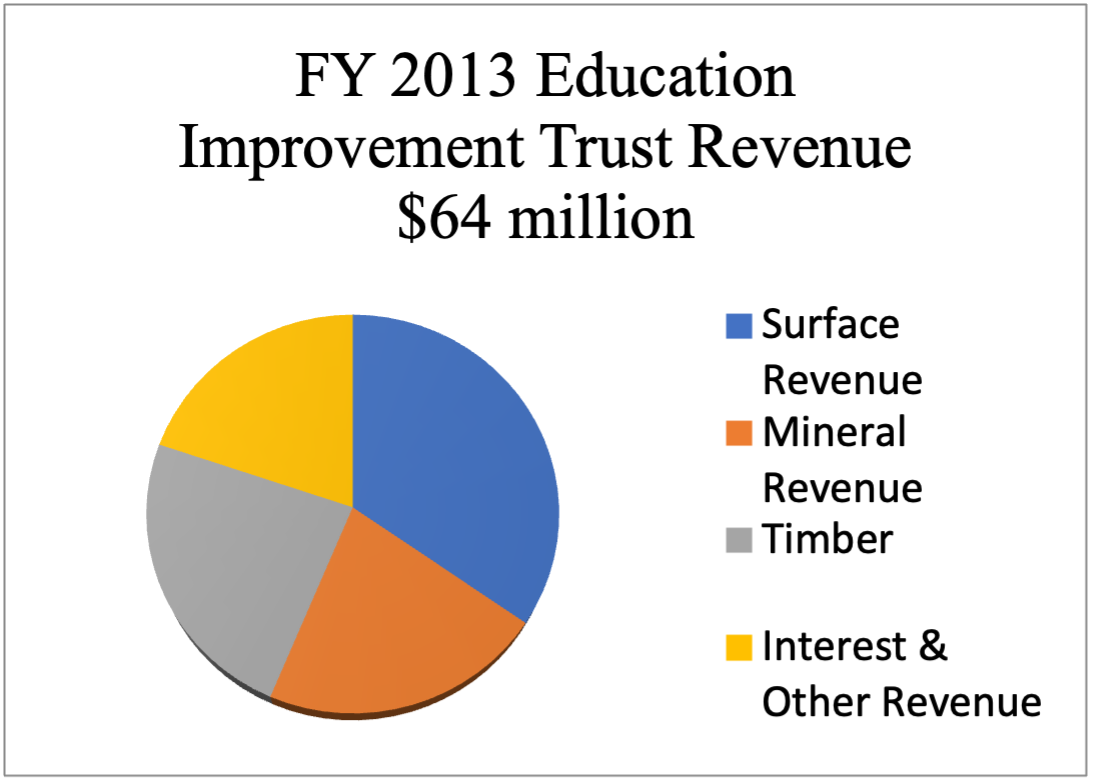
New Mexico Gross Annual Land Revenue
This chart shows a typical year of revenue earned from the school trust lands. One can see that the largest revenue source is surface revenue. Mineral revenue is primarily oil and gas leasing and production. Former Secretary of State Delbert Hosemann (2008-2020) made significant changes including requiring standard lease forms, requiring review of re-leasing agreements to assure fair market value is obtained for schools, and publication on the Secretary of State’s website of public bids for hunting and fishing licenses. The Secretary’s office signed an historic agreement with the Mississippi Forestry Commission to bring modern forestry management practice to timber production on the school lands. Timbered lands must now all have published plans for the forests on the school Section 16 lands.
The current Secretary of State is Michael Watson who has served from 2020. He continues to practice the fiduciary duty to the public schools on the Section 16 lands to support schools.
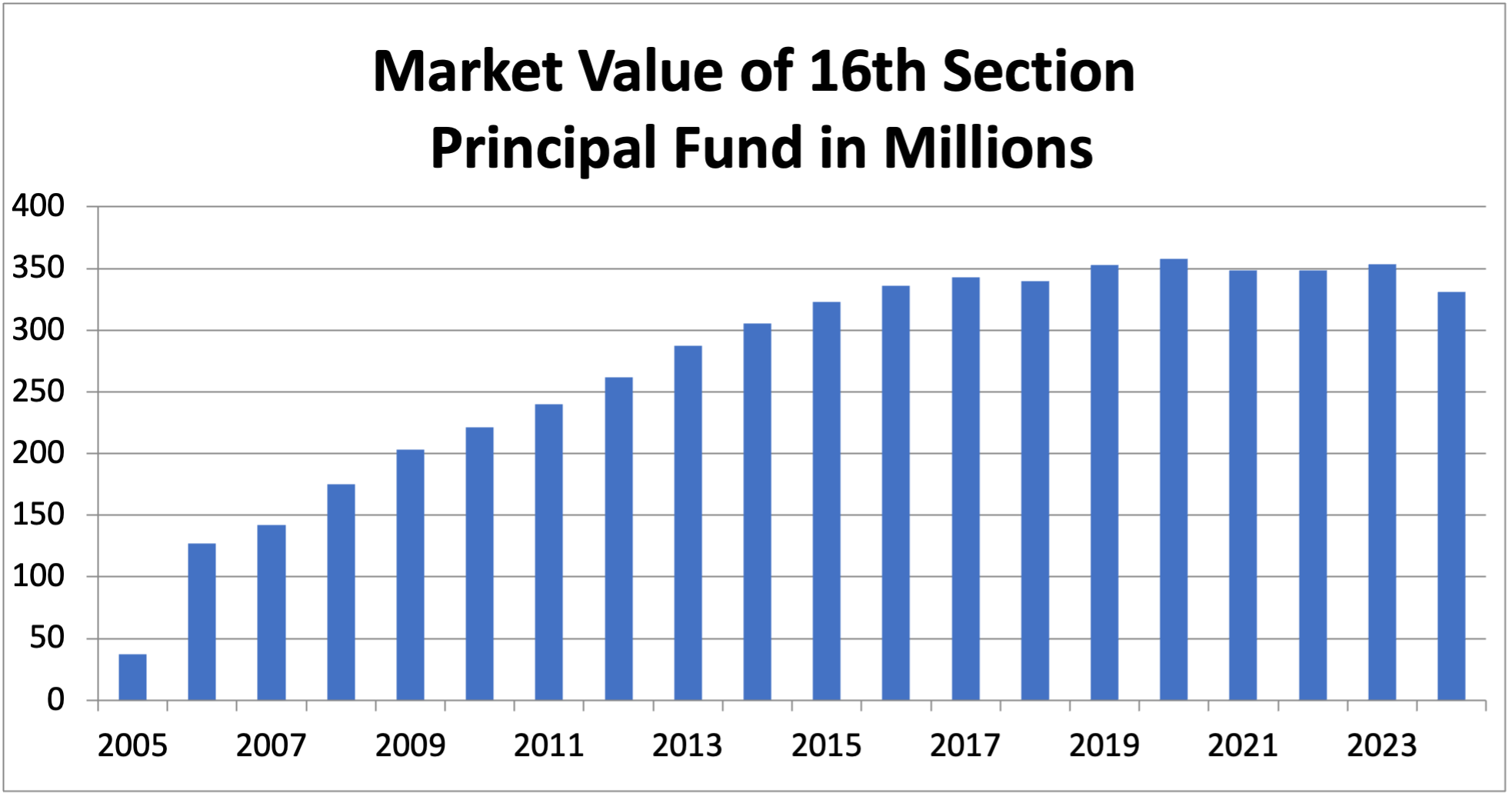
How does this revenue get to schools and benefit students? In Mississippi, each one of the 107 school districts manages their own 16th Section lands and their own 16th Section Principal Fund. As these trust lands are managed, the districts ensure that the public schools benefit and are the primary beneficiaries in receiving the revenue generated from the lands. The Principal Fund is the “permanent” fund that is managed by each school district and only the interest generated can be spent. The money in the principal fund is “one-time” money such as for easements, permanent damage to the trust land, and mineral royalties.
The Mississippi 16th Section Principal School Fund is compiled by the Secretary of State’s Office from each school district’s permanent fund and is as follows:
The revenue from school lands and funds are used by schools differently in various states. Wisconsin funds school libraries, Washington builds schools in rural parts of the state, Arizona funds classroom needs, Minnesota and South Dakota send the annual revenue proportionately to each school district, and Utah allows parents, teachers and the principal in every school to develop academic programs addressing that school’s most pressing academic need. Each Mississippi district that still has school lands, generates revenue and their local school board determines what school needs will be met with the funding that is expendable. Most other states put the children’s trust funding into the overall education funding pot, usually reducing some other funding for education and supplanting it with the revenue from the children’s trust.
