

Texas
FY 2024
On May 20, 1785, the Continental Congress provided land to support schools as each new state joined the union. “There shall be reserved the lot No.16, of every township, for the maintenance of public schools within the said township.” Over 134 million acres were subsequently granted in trust as a condition of statehood. Today over 45 million acres continue to be held in trust by 20 states for the support of public schools. Revenue is placed in permanent school funds, now over $115 billion, and over $5 billion was distributed to western schools in FY 2024. However, few educators or members of the public know about school trust lands. Advocates for School Trust Lands is sharing this grand history of America’s founding vision for schools, hoping that over time Americans will know of school trust lands and their support for public schools.
Texas entered the Union as an independent republic in 1845 and retained all of its public lands. The Texas Permanent School Fund was created with a $2 million appropriation by the Texas Legislature in 1854, expressly to benefit public schools in Texas. In 1873, the Texas Legislature set aside one-half of the remaining public domain to benefit public schools. The Permanent School Fund consists of all land and all revenues derived from the land or other properties appropriated for the support of public schools. Today, the Texas General Land Office (GLO) manages over 12 million acres of school mineral rights and almost 1 million school surface acres. Most of the lands are scattered in the western part of Texas near El Paso.
In FY 2024 Texas generated $1,630,030,661 from its school trust lands. Oil and gas always generates the greatest revenue, followed by surface uses and minerals. Texas has 10.35 miles out from shore as their seaward boundary. All revenue from these shoreline submerged lands also goes to schools.
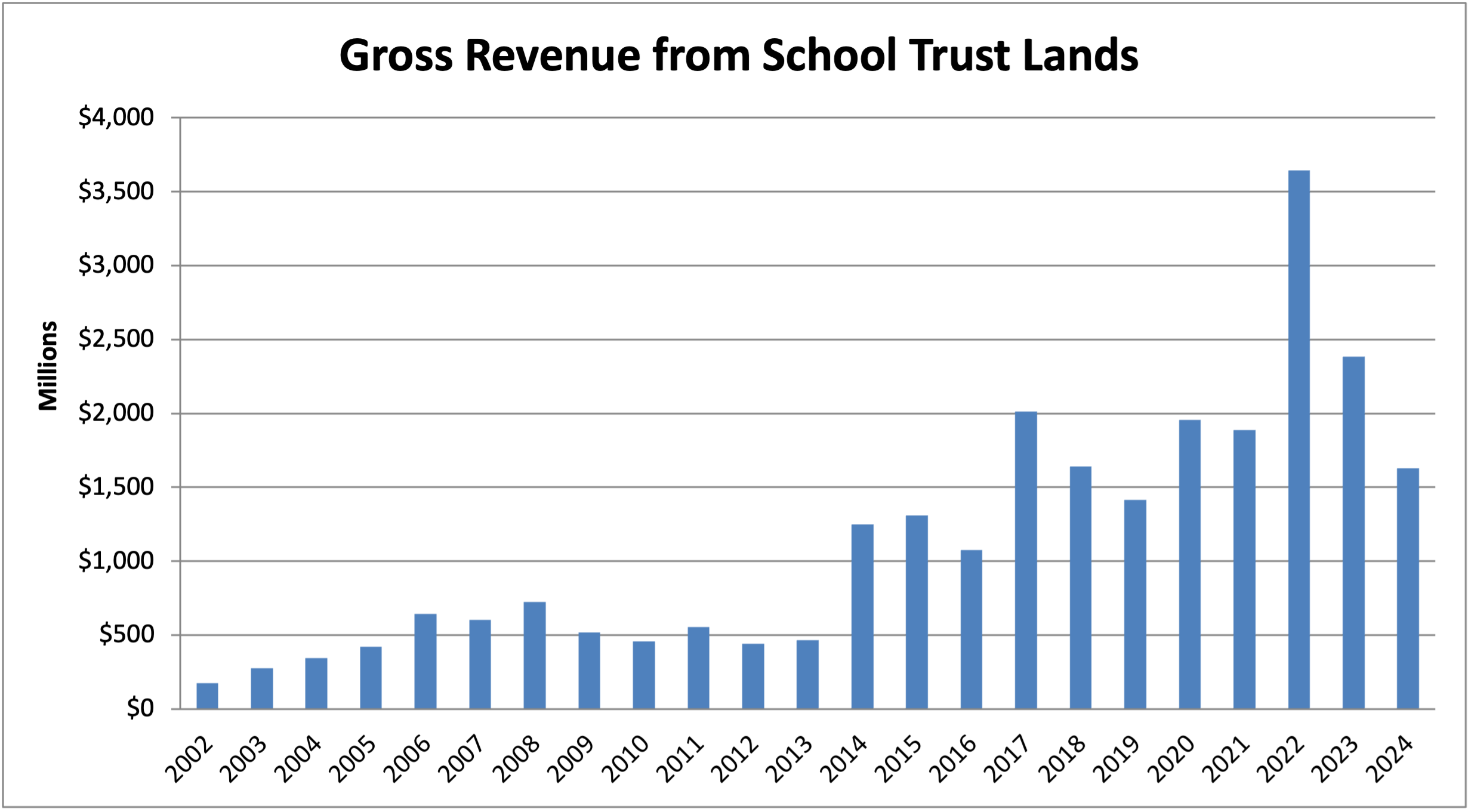
How does this revenue get to schools and benefit students? Beginning 2007 under the direction of the Land Commissioner, the General Land Office invests the revenue from minerals, farming, grazing, and various other endeavors and deposits them in the Real Estate Special Fund Account (RESFA). This invested revenue is also part of the Texas Permanent School Fund. Revenue prior to FY 2007 was all invested in the Texas Permanent School Fund by the Texas Education Agency. States like Texas that invest all their revenue in their school fund have more money to support schools, just as people who save have more money than those who spend. Prudent investments, compounded over time, generate greater returns for schools. The Texas Permanent School Fund is the largest school trust fund in the nation, and the second largest educational endowment. One portion of the fund is invested by the Texas Education Agency. The Real Estate Special Fund Account (RESFA) is invested by the General Land Office primarily in large infrastructure investments. The total weighted return on all investments for FY 2024 was 7.31%, among the highest of all the states.
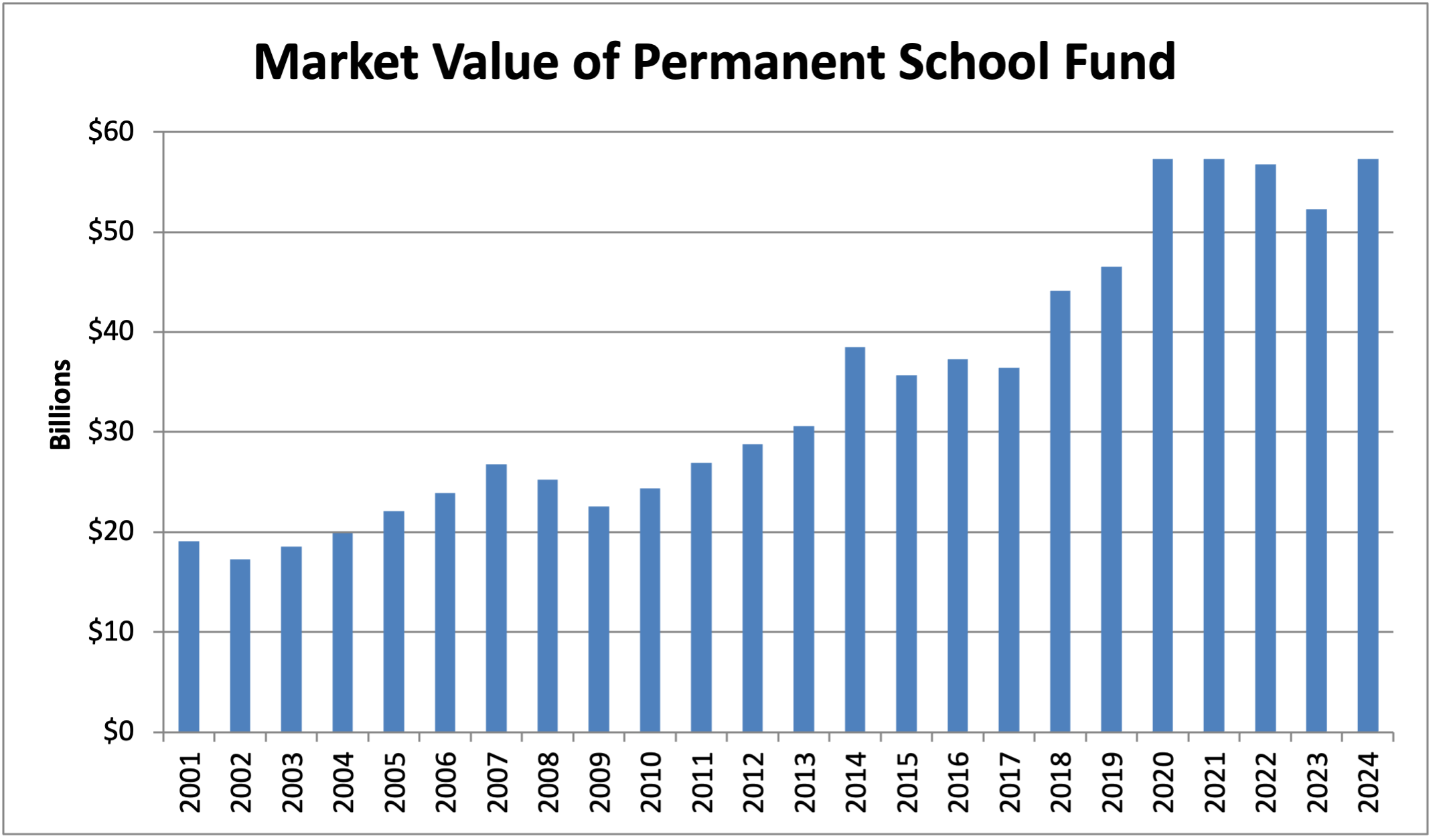
Data from this chart was obtained from the Annual Comprehensive Financial Report created by the Texas Permanent School Fund Corporation.
Because of the careful management and investment of the funds within both parts of the Permanent School Fund, $2,156,354,137 was distributed in FY 2024.
Various states use trust funding differently. Texas distributes billions for instructional materials, technology, and other expenses for public and charter schools. Wisconsin funds school libraries, Washington and Colorado build schools in rural parts of the state, Arizona funds classroom needs, Minnesota and South Dakota send much needed additional funding directly to each local school district, and Utah allows parents, teachers, and the principal elected in every school to develop programs to improve academic performance. Most other states put the investment distribution to schools into the overall education funding pot, usually supplanting other revenue with that from the children’s trust. Those states are not ibn compliance with their enabling acts which in every case granted the lands for the support of common, public schools.
