

Five Questions to ask on Utah's Book Cliffs Land Deal
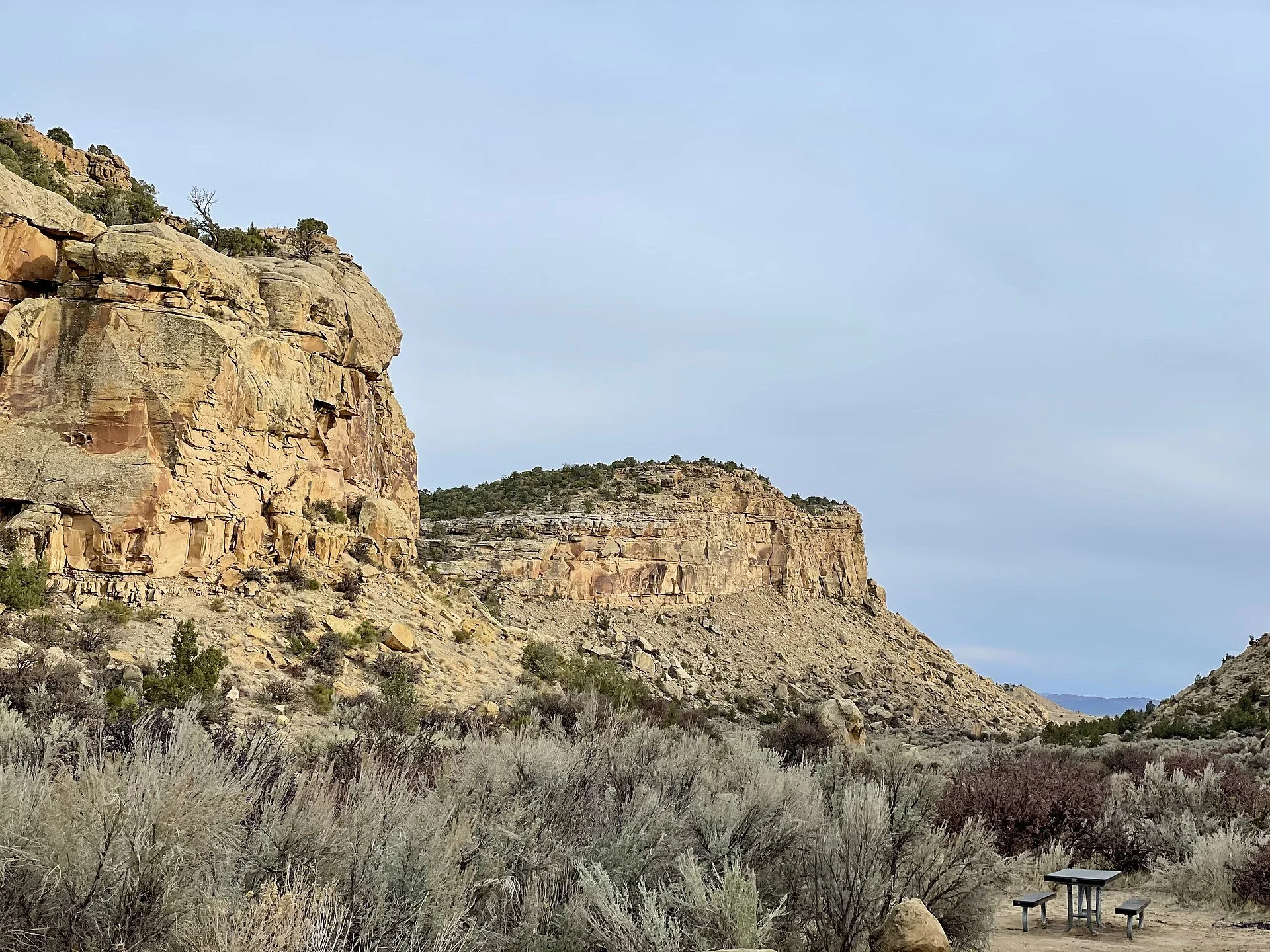
When a state agency moves to sell 50,608 acres of public school trust land in east-central Utah through a closed-door, non-competitive transaction, the public deserves absolute clarity. This isn't just a standard real estate transaction; it is a critical test of the sacred compact, the binding legal agreement made at statehood that mandates school trust lands be managed for the exclusive financial support of public schoolchildren.
At a recent meeting of the Utah School and Institutional Trust Lands Administration (TLA), the agency appointed to act as the independent trustee for these educational assets, Advocates for School Trust Lands raised a series of fundamental legal questions. If the state intends to push forward with a $50 million deal to transfer the Book Cliffs to the Department of Natural Resources (DNR), five critical questions must be answered first:
Can classroom emergency reserves legally bankroll a state land transfer?
The $50 million the DNR is deploying to secure this land isn't standard agency capital. It is money earmarked for the Public Education Economic Stabilization Restricted Account (PEESRA), a statutory rainy-day fund funded by education tax dollars, designed exclusively to protect classrooms and preserve teacher salaries during economic recessions.
The Question: May the legislature constitutionally deduct $50 million from a restricted education safety net and disburse it to a natural resources agency to buy land held in trust? Is it appropriate to treat classroom protection capital as a flow-through account for state agency acquisitions?
Does an appraisal ever equal "Fair Market Value" if you ban the open market?
Under Section 10 of the Utah Enabling Act of 1894, the law explicitly mandates that trust assets "shall not be sold or leased... except to the highest bidder at a public auction." Yet, by leveraging H.B. 262, this transaction completely bypasses public advertising and pre-determines the buyer.
The Question: Does a closed-door real estate appraisal meet the strict fiduciary standards of "fair market value" when the open market is legally prohibited from bidding? If private entities or sovereign tribes value a continuous surface asset of this magnitude more highly, why are they barred from competing?
Can the State legally act as the buyer, the seller, and the trustee simultaneously?
Traditional trust law includes a strict protective framework known as the "No Further Inquiry" Rule. When a trustee engages in self-dealing, meaning they sit on all sides of the transaction ledger at once, the actual transaction price becomes legally irrelevant because the conflict of interest is absolute.
The Question: Under standard trust principles, is it a breach of trust for the state to act as the sole allowable purchaser of its own trust assets? When state agents act as both buyer and seller, how can the mandatory boundary of undivided loyalty survive?
Can politicians pass a law that puts school trust lands at a disadvantage?
H.B. 262 creates a unique regulatory mechanism specifically designed to steer this massive block of Book Cliffs land into state agency hands without a public market discovery process.
The Question: Just because politicians pass a statute, does that automatically make it constitutionally sound? May Utah enact special statutory provisions on school trust lands that put those assets at a distinct economic disadvantage compared to private lands? (A landmark 1989 Utah Attorney General opinion has already answered this in the negative.) .
Will this transaction invite costly legal friction and title instability?
Bypassing the open market to satisfy immediate political pressure doesn't just shortchange public school children; it creates massive institutional risk.
The Question: By pushing through an insider, non-competitive market bypass, is the state exposing itself to the exact type of costly legal friction and title instability seen in Ute Indian Tribe v. Ure?
The Bottom Line
Just because an action is claimed to be in the "best interest" of public access does not mean it satisfies the constitutional mandate of a trustee's fiduciary duty. Before the TLA Board executes a final contract on May 29, school trust beneficiaries deserve legally researched, transparent responses to these questions from the Attorney General.
Let's find a solution that allows our trustees to preserve public access without compromising their constitutional integrity or violating the state's foundational compact.
Take Action:
The TLA Board of Trustees is scheduled to make a final decision on this contract on May 29, 2026. Use our [ASTL Board Advocacy Toolkit] to send a professional letter to the Trustees today, demanding they suspend all action on the Book Cliffs sale until the Attorney General delivers a formal, independent constitutional opinion.
