

The Three-Sided Squeeze on School Trust Lands
Lessons from the Mount Baker Test Case
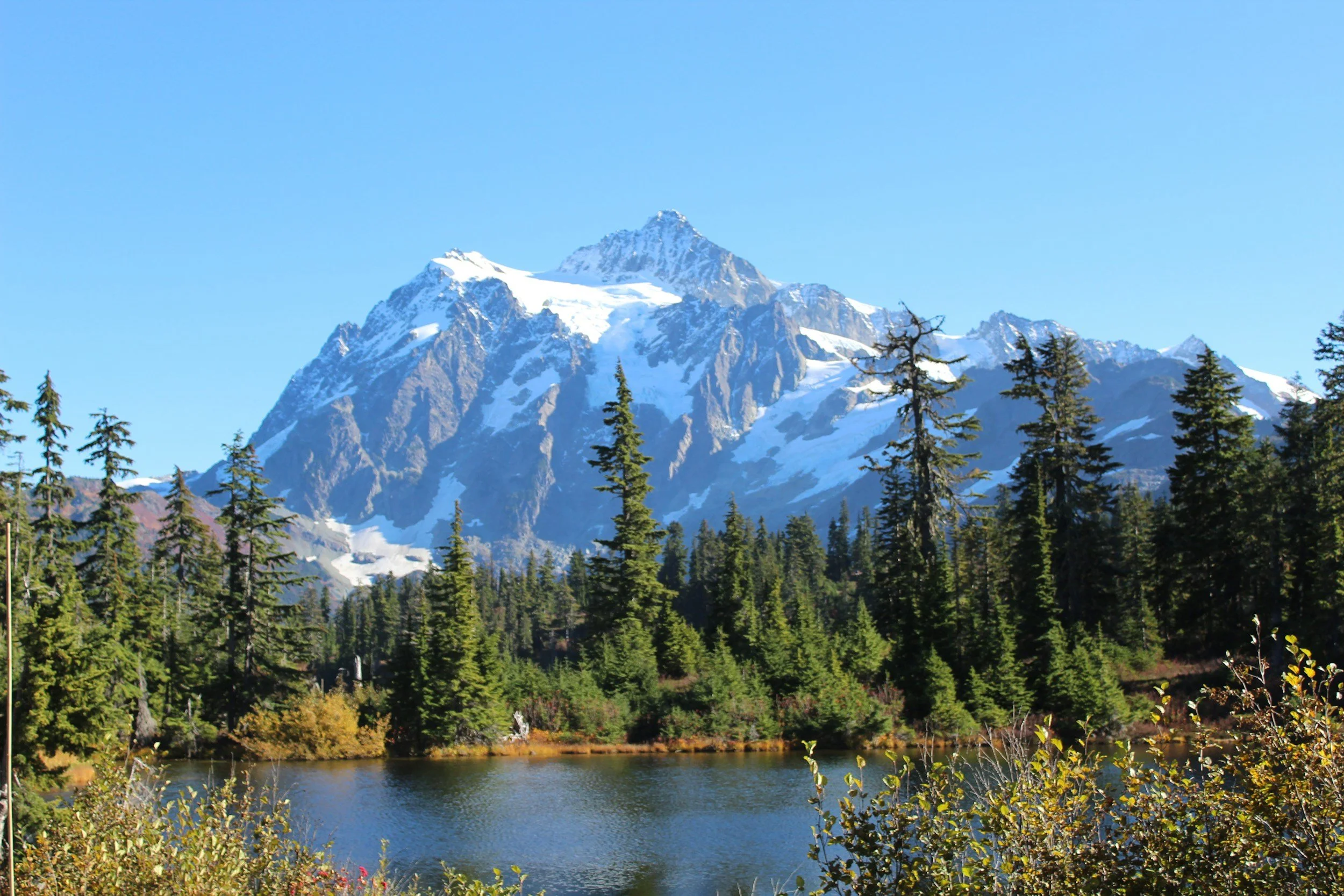
Mount Baker
The core foundation of state school trust land management rests upon a singular, unyielding legal principle: the Sacred Compact. When the federal government granted millions of acres to entering states through their respective Enabling Acts, it established a solemn, binding trust. Under long-standing legal precedents such as County of Skamania v. State of Washington, the state must act as a fiduciary trustee, bound by the principle of undivided loyalty, to manage these lands for the exclusive financial benefit of common school beneficiaries.
Yet today, a dangerous convergence of ecological stress, federal resource failures, and state-level political directives is crushing rural school districts. The situation unfolding in Washington’s Mount Baker region is a clear case of this "three-sided squeeze"—and provides a blueprint for how trust advocates can fight back.
Side One: The Ecological Reality (The Bugs)
To fulfill their fiduciary duty, trust managers must protect the material value of the trust's physical principal: the timber. However, a changing climate threshold is supercharging biological threats, moving them into vulnerable forest stands that historically served as stable revenue bases.
Data from the Washington State Department of Natural Resources (DNR) reveals an unprecedented ecological shift:
Unprecedented Westward Shift: The Western Spruce Budworm (WSB), a native defoliator typically restricted to drier regions east of the Cascade crest, has established a persistent, two-year foothold in the high-elevation forests of central Whatcom County around the Mt. Baker area.
The 2024 Misidentification: Initial ground checks in late 2024 misidentified the damage as the western blackheaded budworm, but extensive larval sampling in the spring of 2025 verified that the primary driver is indeed the more destructive Western Spruce Budworm.
Explosive Regional Footprint: The detectable WSB defoliation footprint along the Cascade Crest has expanded drastically to approximately 149,200 acres, encircling Lake Chelan and threatening further spread into 2026.
When extreme summer heat and severe seasonal droughts lower tree moisture levels, these native insects capitalize on weakened stands. Without active management, these vital trust assets are left completely defenseless against rapid deterioration.
Side Two: The Federal Resource Vacuum (The Blind Spot)
A trustee cannot manage what it cannot see. Fiduciary duty requires that land management decisions be data-driven. Yet, at the exact moment that insect outbreaks are mutating and expanding, federal administrative and budget clawbacks have effectively blinded public land managers.
The joint state-federal monitoring infrastructure has experienced a severe breakdown:
A 25% Monitoring Deficit: For the first time since 2021, a full forest health survey was blocked, leaving 25% of Washington's 22 million forested acres—roughly 5.5 million acres—completely unmonitored.
The Personnel Evacuation: Mid-season federal personnel restructuring within USDA Forest Service (USFS) Region 6 resulted in the immediate loss of permanent, full-time Aerial Detection Survey (ADS) program managers, data analysts, and coordinators.
Grounded Aviation Assets: Compounding the staffing crisis, the Washington Department of Fish and Wildlife (WDFW) terminated its pilot position and retired its primary Partenavia P68 survey aircraft, forcing DNR to divert vital wildland fire suppression aviation resources to piece together a fragmented footprint survey.
When the federal government defaults on its cost-sharing and staffing obligations under cooperative forestry frameworks, state trustees are forced to operate in the dark, unable to accurately deploy proactive timber salvaging or density reductions before trust value rots away.
Side Three: State-Level Fiduciary Distortion (The Politics)
While federal resource cuts undermine forest monitoring from the right, state-level policy preferences are simultaneously restricting active silvicultural intervention from the left. In Washington, Commissioner of Public Lands Dave Upthegrove has advanced an administrative strategy that actively decouples school revenue from trust assets to favor environmental preservation.
This manifests in clear structural failures:
The Conservation Pause: By administrative order, the state has enacted an "Older Forest" set-aside, removing 79,876 acres of high-value, mature timber from the harvest schedule without providing any financial compensation to the school beneficiaries.
Actuarial Camouflage: To mask the staggering economic impact of these pauses, the state has applied a minor 1.7% discount rate—derived from slow-growing Eastside Ponderosa Pine biological metrics—to Westside timber assets. This artificial manipulation mathematically pretends that waiting 50 years to harvest costs the schools nothing, disguising a true $1.58 Billion asset loss as a mere $693 Million.
Violating the Financial Maturity Doctrine: Pursuant to BNR proceedings, a trustee's obligation is bound to the economic maturity of the timber stand. Once a stand hits physical maturity, leaving it unharvested represents idle capital rather than an appreciating asset.
A glaring example of this decadal stagnation is Lost Glove Unit 1 (Coordinates: 48.783, -122.124). Geospatial time-series scans show that while the stand reached its clear, high-density harvest window in 2014, a ten-year pause in active management has frozen the asset, reducing revenue for local rural schools.
The Human Toll: Mount Baker School District in "Binding Conditions"
The consequences of this three-sided squeeze do not exist in a policy vacuum; they have direct, devastating impacts on local classrooms. Because of the state’s administrative harvest pauses on mature trust assets, the Mount Baker School District (MBSD) is currently facing an annual revenue shortfall of $1,010,000. This severe withholding has forced the district to comply with state-mandated "Binding Conditions".
Rural communities are effectively being forced to bear the entire financial burden of urban environmental preferences. The state is violating the Prudent Investor Rule and the core tenet of Undivided Loyalty by forcing school districts to accept sub-market returns on their asset principal.
The Watchdog Blueprint: Enforcing Statutory Redress
Advocates for School Trust Lands cannot simply watch a crisis expand while beneficiaries suffer. Trust advocates have a powerful, non-discretionary statutory pathway to break this gridlock and shift the financial burden back onto the state.
Invoke Multiple-Use Compensation (RCW 79.10.120): This statute explicitly mandates that if the state chooses to utilize trust lands for non-monetary public benefits—such as carbon sequestration or ecological legacy stand preservation—the trust beneficiaries must be compensated at Fair Market Value.
Deploy the Mandate of SB 5994: Signed into law via an Emergency Clause on March 16, 2026, SB 5994 provides an absolute statutory weapon. It legally requires the State Treasurer to distribute timber tax funds to school districts operating under binding conditions, calculating the distribution based on their highest historical rate from the previous two years.
Because SB 5994 utilizes the non-discretionary term "shall," the State Treasurer has no administrative leeway. Once an impaired district, like Mount Baker, certifies that its deficit is directly linked to the DNR's timber harvest halts, the Treasurer is legally obligated to backfill that shortfall directly from the State General Fund.
Conclusion
The Mount Baker case proves that when federal resources vanish, and state policies manipulate trust math, the Sacred Compact is fundamentally compromised. However, by leveraging evidence of unmanaged, mature stands and executing the procedural roadmap laid out by SB 5994, school districts can force a zero-sum political reality: if the state wants to pause active management for political or environmental reasons, urban tax dollars from the General Fund must pay for it.
We must hold the trustee's feet to the fire. School Trust Lands funding to public schools cannot be treated as an afterthought to political crosswinds.
