

Wyoming
On May 20, 1785, the Continental Congress provided land to support schools as each new state joined the union. “There shall be reserved the lot No.16, of every township, for the maintenance of public schools within the said township.” Over 134 million acres were subsequently granted in trust as a condition of statehood. Today over 45 million acres continue to be held in trust by states for the support of public schools. Revenue is placed in permanent school funds, now over $40 billion, and over $1 billion was distributed to western schools in FY 2022. However, few educators or members of the public know about school trust lands. Advocates for School Trust Lands is sharing this grand history of America’s founding vision for schools, hoping that over time Americans will know of school trust lands and their support for public schools.
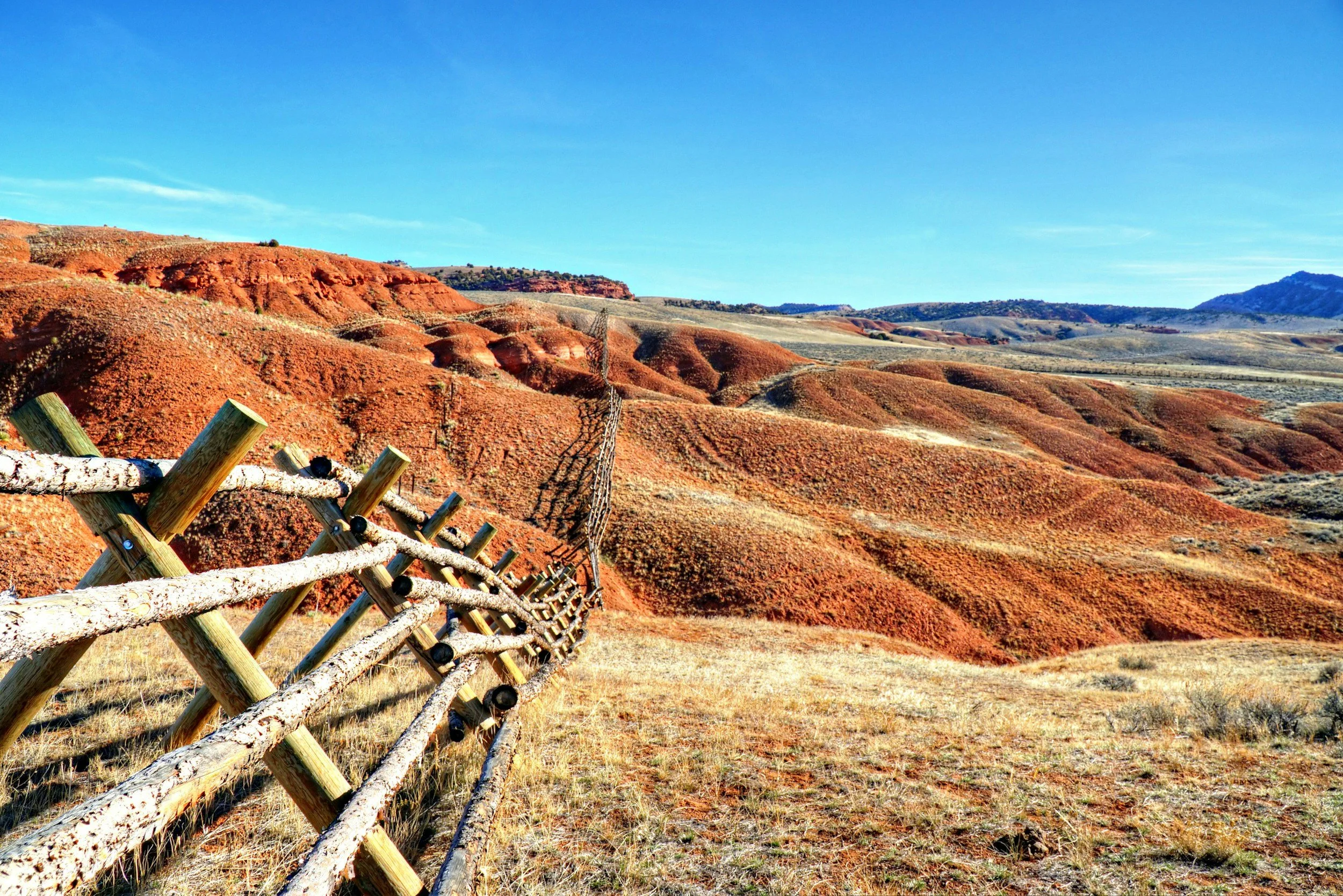
Wyoming: (As of June 30, 2025)
On July 10, 1890, Wyoming joined the union, and Congress granted two sections per township for the support of public schools. Schools received 3.5 million acres and now hold 3.5 million surface acres and 3.4 million mineral acres. These school trust lands and funds are managed by the State Board of Land Commissioners (website: lands.wyo.gov). Stacia Berry is the Director selected by the Governor. The Board is composed of the top five elected officials in Wyoming: Governor, Secretary of State, Auditor, Treasurer, and Superintendent of Public Instruction. The main office is in the Herschler Building, Suite W103 at 122 West 25th Street in Cheyenne and is available by phone at 307-777-7331. The Wyoming Constitution and Legislature have directed the Board of State Lands and Investments to manage trust assets for two key purposes: long-term growth in value and optimum, sustainable revenue production.
The lands and resulting Common School Land Permanent Fund (CSPLF) are managed by the Office ofState Lands and Investments. Agency operations are funded by the state’s General Fund.
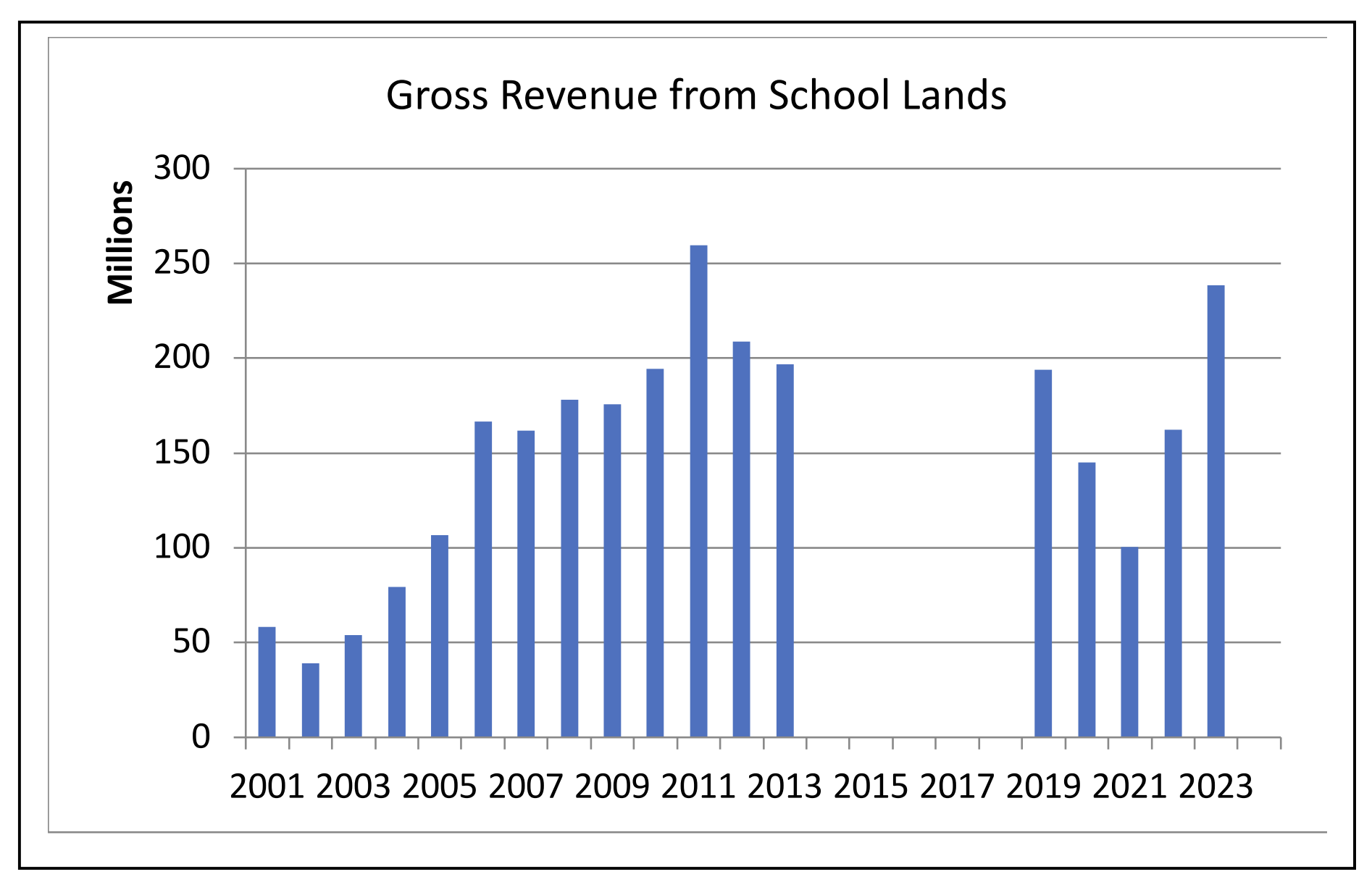
During FY 2025, total earnings by Wyoming school trust lands was $450.2 million. That includes $421.5 million in interest, dividends, and net realized capital gains and $24.2 million in fees, leases, and bonus payments. Revenue to the Common School Land Permanent Fund (CSLPF) is primarily from mineral leasing and royalties, led by oil and gas, and from interest and dividends.
(Source: Concensus Revenue Report to Wyoming Legislature, October 2025)
The lion’s share of the revenue is generated from mineral royalties. The minerals extracted in the state include oil, gas, coal, bentonite, sodium, trona, uranium, sand and gravel. All timber sales revenue withrevenue from renewable sources like leases, temporary permits, rights of way, easements, and fees go to the Common School Income Fund for schools to spend on technology. Note that typical timber revenue is less than 1% of the total revenue.
Revenue generated from nonrenewable trust resources is deposited into two accounts. One-third of state mineral royalties from trust lands, totaling $114.7 million in FY2025, is deposited directly into the School Foundation Program, where it is available immediately for funding by the Legislature, under a new 2024 statute. The remaining two-thirds of royalties and the revenue from nonrenewable sources are deposited into the Common School Permanent Land Fund, where it is prudently and profitably invested by the State Loan and Investment Board, composed of the same top five elected officials. The office is located in Suite W103 in the Herschler Building near the land administration.
The state Consensus Revenue Estimating Group predicts stable annual revenue to the Common School Land Permanent Fund (CSLPF) from state royalties ($108-$114 million a year) through 2030.
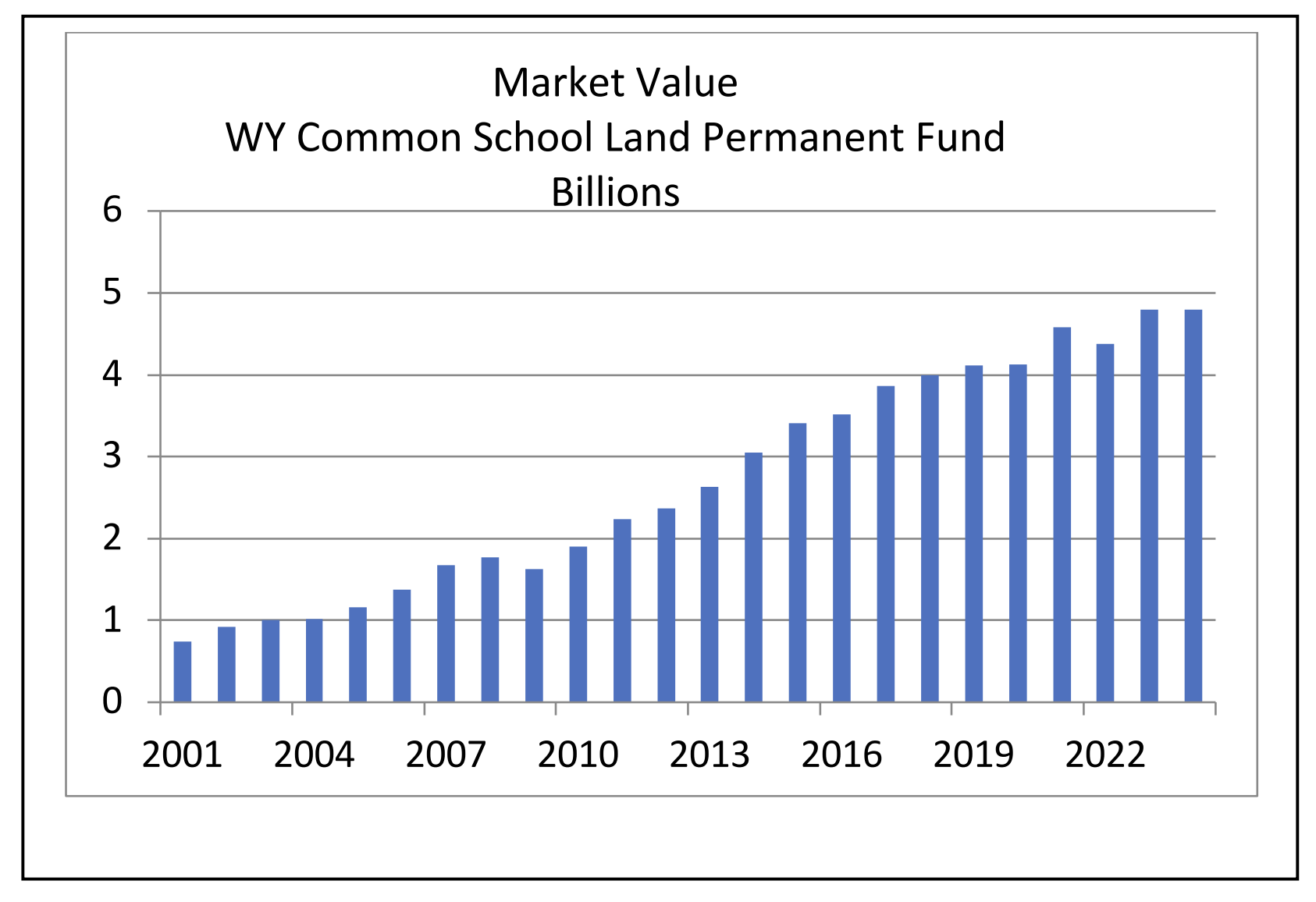
The market value of the CSPLF has grown rapidly in recent years, through legislative appropriations, state severance taxes, state royalties, land sales, and now unrealized capital gains. It took 110 years of statehood to reach $1 billion. The fund was $6.1 billion in July 2025, having grown more than $1 billion in just in the previous two years. The CSPLF is well diversified. The five-year time weighted return net of fees is 4.8%.
Revenue from state trust lands and other sources is directed to the School Foundation Program, which pays for various education-related programs, as appropriated by the Wyoming Legislature. That includes the block grant funding provided for the 48 school districts, as required by the Wyoming Constitution’s guarantee of a uniform and quality education for Wyoming school children. Trust land earnings and investment income produced $232.6 million for deposit to the School Foundation Program.
